

Symposium Proceedings
The Second Symposium on Naval Hydrodynamics was held in Washington, D.C. on Aug. 25-29, 1956.
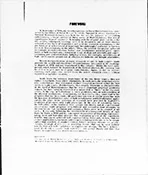
Excerpt from the Symposium Foreword:
In September of 1956, the first Symposium on Naval Hydrodynamics, sponsored by the Office of Naval Research and the National Academy of Sciences – National Research Council, was held for the specific purpose of presenting authoritative, critical surveys of those areas of Hydrodynamics that are of significance in naval science. In keeping with the original plans set down for this series, subsequent meetings were to be devoted to one or more themes selected on the basis of importance and need for research stimulation, on the one hand, or of achievement of important "breakthroughs" and hence of interest for wide dissemination, on the other. Thus, the present symposium achieved an example of each criterion: hydro- and aerodynamic noise (of great importance in both warfare and commercial usage of ships and aircraft), and super-cavitating and ventilated flows (which promise, for example, possibilities of high-speed marine propulsion at efficiencies hitherto not thought attainable).
Symposium Papers
Contribution of Ship Theory to the Seaworthiness Problem. A.J. Acosta
Pressure Waves from Collapsing Cavities. T. Brooke Benjamin
Jets, Wakes and Cavities. Garrett Birkhoff
The Fluctuating Surface Pressure Created by Turbulent Boundary Layers on Hypersonic Vehicles. Edmund E. Callaghan
Air Entrainment Behind Artificially Inflated Cavities. I.J. Campbell and D.V. Hilborne
Wall Effects in Cavitating Flows. Hirsh Cohen and R.C. DiPrima
Some Aerodynamic Cavity Flows in Flight Propulsion Systems. William G. Cornell
Sound Radiation into a Closed Space from Boundary Layer Turbulence. Ira Dyer
Cavitation Noise. Hugh M. Fitzpatrick
Pressure Fluctuations on the Wall Adjacent to a Turbulent Boundary Layer. Mark Harrison
Excitation of Acoustic Resonators by Flow. Uno Ingard and Lee W. Dean, III
The Influence of Depth of Submersion, Aspect Ratio and Thickness on Supercavitating Hydrofoils Operating at Zero Cavitation Number. Virgil E. Johnson, Jr.
A Theory of Turbulence Dynamics. Robert H. Kraichnan
On Supercavitating Propellers. H.W. Lerbs
Recent Investigations on Sonic and Ultrasonic Cavitation in Gottingen. Erwin Meyer
Similarity Relations in Aerodynamic Noise Measurements. E. Mollo-Christensen and H.W. Liepmann
Some Experimental and Theoretical Results Relating to the Production of Noise by Turbulence and the Scattering of Sound by Turbulence or Single Vortices. Ernst-August Muller
Theory and Experiment in Aerodynamic Noise, with a Critique of Research on Jet Flows in Their Relationship to Sound. Alan Powell
Noise Production in a Turbulent Boundary Layer by Smooth and Rough Surfaces. Eugen Skudrzyk and Gillian Haddle
The Design and Estimated Performance of a Series of Supercavitating Propellers. A.J. Tachmindji and W.B. Morgan
Cavity Flows of Viscous Liquids in Narrow Spaces. Sir Geoffrey Taylor and P.G. Saffman
A General Linearized Theory for Cavitating Hydrofoils in Nonsteady Flow. R. Timman
New Developments in the Theory of Supercavitating Flows. Marshall P. Tulin
Mechanics of Ventilation Inception. Kenneth L. Wadlin
Ventilation of Bodies Piercing a Free Surface. J.M. Wetzel
Unsteady Supercavitating Flows. T.Y. Wu